
Department Coordination Problems in Schools
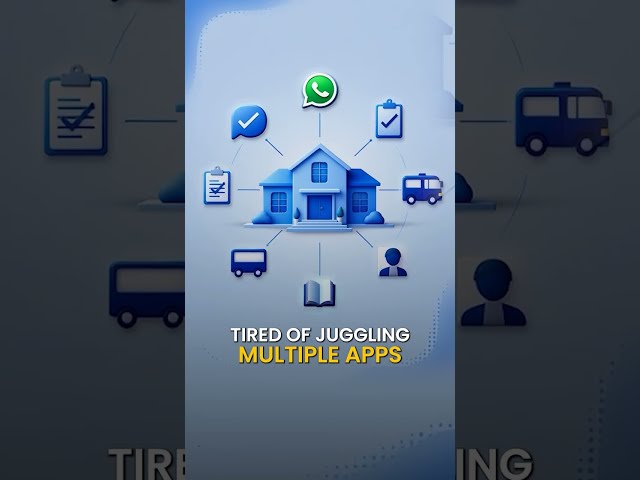
Your school has academic, admin, accounts, transport, library, sports departments. They all need to share information and coordinate activities. But phone calls and WhatsApp groups aren't working.
The Challenge of Inter-Department Communication
A school functions through coordination between multiple departments. Academic department needs exam halls, accounts needs to know who attended, admin needs to track events, transport needs route optimization, library needs syllabus details. When information is shared through phone calls, WhatsApp groups, email threads, and paper circulars, critical information gets lost. One department doesn't know what another is doing until there's a conflict or problem.
The Coordination Gap
A medium school has 6-8 departments, 30-40 staff members. Each department needs information from 3-4 other departments daily. That's 50+ inter-department information exchanges every day. If even 5% have communication gaps, that's 2-3 coordination failures daily—50+ per month. Each failure creates rework, delays, or errors.
Common Department Coordination Problems
- Information silos: Each department maintains own records, others can't access
- Communication gaps: Critical information not reaching relevant departments
- Duplicate work: Multiple departments maintaining same data separately
- Conflicting schedules: Departments plan activities without checking with others
- Approval delays: Requests stuck in approval chain, unclear who needs to approve
- No visibility: Can't see status of cross-department requests
- Email overload: Important messages lost in long email threads
- Blame game: When something goes wrong, departments point fingers
Real Scenarios Schools Face
The Admit Card Chaos
Exam department prepares admit cards for half-yearly exams and starts distribution. Accounts department calls—10 students with major fee dues have received admit cards. Policy is no admit card until 90% fee paid. But exam department doesn't have access to fee records. They sent an email asking for defaulter list a week ago but got no response. Now printed admit cards need to be retrieved from students. Parents are confused and upset. This happens every exam cycle because coordination is manual.
The TC Rejection Drama
Parents apply for Transfer Certificate. Admin processes application, confirms all documents are in order, issues TC. Parent goes to accounts office to collect. Accounts says there are pending dues of ₹12,000 and refuses to give TC. Parents show receipts—they paid last month. Accounts register is not updated. After 2 hours of checking, payment is confirmed in bank but not entered in books. TC is released finally, but parents are angry about the delay and confusion. Poor coordination between payment recording and TC issuance created this mess.
The Event Collision
Academic department schedules final exam from March 20-30. Sports department, without checking, announces annual sports day on March 25. Cultural department has already booked external auditorium for annual function on March 27. All three events overlap, competing for students, staff, and facilities. Rescheduling any event now is difficult—halls booked, parents informed, external coordination done. This chaos happened because there's no unified calendar that all departments check before planning.
Integrated Department Coordination
A unified school management system ensures all departments work on the same database. Admission creates student profile, accounts sees it for fee setup, academic sees it for class assignment, transport sees it for route allocation—automatically. Workflows define who needs to approve what. Shared calendar prevents event conflicts. Information flows seamlessly without phone calls or emails.
What Integrated Coordination Provides
- Unified database: All departments access same student/staff information
- Defined workflows: Clear processes for TC, gate pass, leave, admission, etc.
- Automatic notifications: Relevant departments informed when action needed
- Shared calendar: All departments see and respect school-wide schedule
- Role-based access: Each department sees information they need
- Dashboard tasks: Pending approvals and actions visible on login
- Audit trail: Track what each department did and when
- Integrated reporting: Reports pull data across departments
- Document sharing: Policies, circulars, documents accessible to all
- Communication tools: Announcements, alerts, messaging within system
Key Department Coordination Scenarios
New Student Admission Process:
- Admission team creates student profile with complete details
- Accounts automatically receives notification to set up fee structure
- Academic department assigns class and section based on admission
- Transport department receives route request if applicable
- Library creates borrower account
- ID card generation gets triggered
- All departments work on same student record—no duplication
TC Issuance Workflow:
- Parent submits TC request through office or portal
- Request goes to all relevant departments: accounts (fee clearance), library (book return), admin (documents check)
- Each department sees pending task on dashboard
- As each clears, status updates visible to all
- Once all approvals complete, TC is generated automatically with all data pulled from records
- No phone calls, no back-and-forth, no delays
Exam Coordination:
- Academic department creates exam schedule in system
- Dates appear on school calendar automatically
- Accounts can see which students are eligible (fee status check)
- Admin knows hall requirements, invigilation needs
- Parents see exam schedule in their portal
- Admit cards generated only for eligible students
- Results entered by teachers flow to report card generation
Event Planning:
- Any department planning event checks school calendar first
- Creates event with date, venue, requirements
- Other departments see the event and can flag conflicts
- Required approvals flow to principal/management
- Budget request goes to accounts
- Facility booking recorded in admin module
- Parent notification sent through communication module
Benefits of Seamless Coordination
Reduced Errors: Information entered once, used everywhere. Accounts updates fee, exam department sees updated status. No manual communication means no miscommunication.
Faster Processes: TC that took 3-4 days now takes 1 day because all clearances happen in parallel on system. Admit cards generated without waiting for fee defaulter list.
Better Accountability: Every action tracked with department and timestamp. When issue occurs, audit trail shows what happened. No blame game—data speaks.
Improved Parent Experience: Parents don't get conflicting information from different departments. One student record means consistent information everywhere.
Staff Productivity: Less time spent on phone calls, emails, meetings to coordinate. Dashboard shows what needs attention. Focus on productive work instead of chasing information.
Management Visibility: See bottlenecks where coordination fails. Identify which departments need better workflows. Make data-driven improvements.
Communication Tools
Announcements: Principal or admin can send announcements to all staff, specific departments, or roles. No more email chains where people miss messages.
Task Assignment: Create tasks for specific departments or staff members. Track completion status. No more "I didn't know this needed to be done."
Document Repository: Policies, circular copies, meeting minutes, templates stored centrally. All departments access latest versions. No outdated documents.
Internal Messaging: Quick questions can be messaged within system instead of phone tag. Searchable history of communications.
Notification Preferences: Each user can set how they want to be notified—email, SMS, app push. Important alerts don't get missed.
Unified Department Coordination
All departments work on same data, workflows route tasks automatically, coordination happens seamlessly.
Get Free DemoCoordination Features
- ✓ Unified database
- ✓ Workflow automation
- ✓ Shared calendar
- ✓ Task dashboards
- ✓ Automatic notifications
- ✓ Audit trails
Work as One Team
Break down department silos. Information flows smoothly. Everyone stays informed.
Learn MoreHow Schoolites Solves This
Our comprehensive school management software addresses all these challenges and more
Automated Workflows
Eliminate manual tasks with intelligent automation that saves hours every day
Real-Time Data
Access accurate information instantly across all school operations
Mobile Access
Manage your school from anywhere with our mobile app for staff and parents
24/7 Support
Expert support team available to help you succeed at every step
FAQs About Department Coordination
Common questions about this school management challenge and how to solve it
Schools have multiple departments—academic, administration, accounts, HR, transport, library, sports—that need to work together. When information flows through phone calls, WhatsApp messages, and paper circulars, things get missed. Admission office doesn't know student has fee dues, academic department schedules exam without checking calendar, accounts needs data from admin but request gets lost. Without systematic coordination, these gaps create delays, errors, and frustration.
Key dependencies include: Admission → Accounts (new student fee setup), Accounts → Academic (fee defaulters shouldn't get admit cards), Academic → Administration (exam hall requirements), HR → Accounts (staff attendance for salary), Transport → Accounts (route fee collection), Library → Academic (book requirements for syllabus), Sports → Admin (event coordination, facility booking). When these handoffs are manual, coordination fails.
An integrated system means all departments work on the same database. When admission creates a student, accounts automatically sees them for fee setup. When accounts marks fee paid, exam department can generate admit card. When academic schedules exam, calendar shows all departments. Information flows automatically based on defined workflows instead of relying on someone remembering to inform everyone.
Common problems: admit cards issued to fee defaulters (accounts didn't inform exam cell), students denied TC because accounts says dues pending but payment was made (accounts not updated), events clash because calendar not checked, transport fee disputes because route changes not communicated, library books not available because syllabus changes not shared. Each failure creates parent complaints and staff frustration.
Digital systems provide workflow management where requests (like TC application, gate pass, leave approval, budget approval) route through required departments automatically. Each person sees pending tasks on their dashboard. Status is visible to requester. Approvals are tracked with timestamps. No requests fall through cracks because someone forgot to pass it on.
Streamline Department Coordination
See how Schoolites creates seamless collaboration across all departments